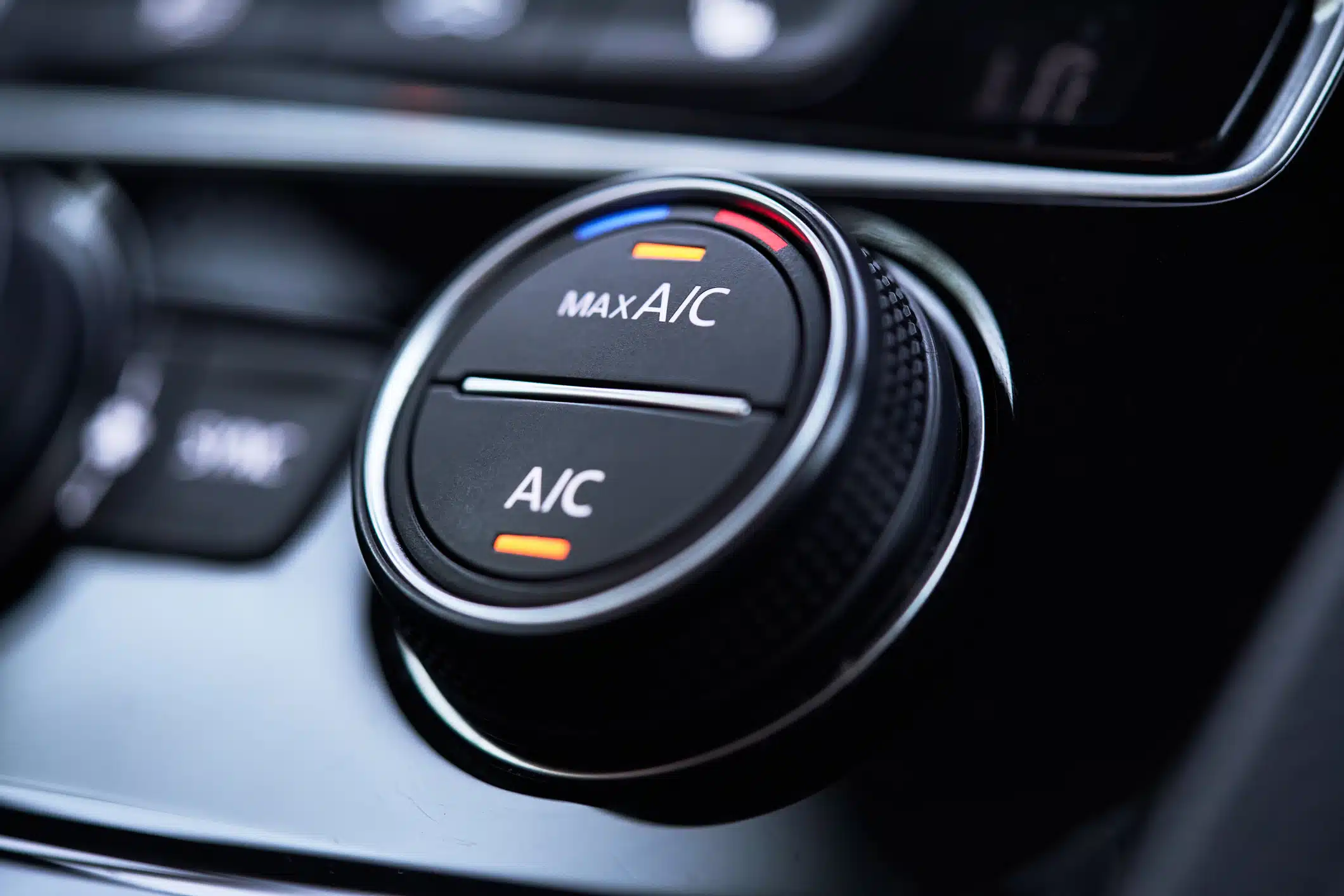
Don’t worry, you’re not the first person to ask this question. In fact, many motorists assume that a car’s cooling system and air conditioning are closely linked, and in some ways at least, they’re kind of right.
It’s easy to see why there’s some uncertainty out there about cooling systems and a/c. After all, they perform similar jobs and are both responsible for removing excess heat from your car. So to clear up any confusion, this guide will take a closer look at the relationship between cooling systems and air conditioning, along with how a lack of coolant can affect the temperature in the cabin.

Does air conditioning use coolant in a car?
Car air conditioning does not use engine coolant. Instead, it uses a separate refrigerant gas that circulates through its own sealed system. However, both systems are located close together at the front of the vehicle and rely on airflow through the radiator area, which can create confusion.
How car air conditioning works
- When the engine is switched on, a belt starts driving the air conditioning compressor. Then, as the a/c is switched on, the pistons inside the compressor begin pumping, compressing the refrigerant gas within the system.
- As pressure builds within the a/c system, refrigerant gases heat up. This causes it to rise out of the compressor unit, where it makes its way to the condenser.
- As the refrigerant gas is compressed, its temperature rises significantly. It then passes to the condenser, where it cools and changes from a high-pressure gas into a liquid.
- The thermal expansion valve regulates the flow of refrigerant into the evaporator by reducing its pressure. As the pressure drops, the refrigerant rapidly cools and begins to evaporate.
- The gas vapour now passes through what’s called an evaporator. This is essentially a radiator-like component that’s used to cool the air from the heater fan. So, as the heater fan blows normal air at the evaporator, it’s cooled and passed into the cabin, creating a cooling effect.
The air conditioning system operates independently from the engine cooling system. The condenser is cooled by airflow through the front of the vehicle, while the evaporator cools cabin air using refrigerant evaporation.

Will a low coolant level affect air conditioning?
Low coolant levels will not normally affect the air conditioning system directly. However, if the engine begins to overheat, some vehicles may temporarily disable the air conditioning compressor to reduce engine load.
It’s important to remember, though, that a low coolant level doesn’t automatically mean that your car will start to overheat; it depends on how low the level drops. A car without coolant can exhibit all sorts of symptoms, with a rising temperature gauge being one of the first tell-tale signs you’re likely to notice.
If your engine begins to overheat, it is usually recommended to switch the air conditioning off to reduce engine load. Turning the cabin heater on full can help draw heat away from the engine and lower its temperature temporarily.
Top tips for using air conditioning correctly in your car
Now that we’ve established the link between a/c and engine coolant, here are some bonus tips that could help you to get more from your car’s air conditioning unit and ensure it’s working at its best summer after summer:
- Regas your car’s air conditioning every 2-3 years: Regassing air conditioning involves switching out the refrigerant gas inside the system for new fluid. Over time, dirt, dust and small amounts of refrigerant can slowly escape from the system, reducing cooling performance. Regassing restores the correct refrigerant level.
- Ensure your car’s cooling system is topped up with quality coolant: As made clear throughout this guide, the coolant level can have an indirect effect on the efficiency of your car’s a/c unit, so make sure coolant is topped up to the max fill line on the reservoir at all times.
- Run the a/c regularly to maintain peak gas pressure: Even in the winter months, it’s important to run your car’s a/c from time to time. That way it won’t become clogged with as much dirt and bacteria, and will also improve gas pressure and efficiency in the long term.
We hope this guide has cleared up any lingering doubts you may have had about how engine coolant and air conditioning systems are linked. Don’t forget that if you’re looking for a high-performance coolant/antifreeze to add to your car, Prestone is regarded as one of the best premium coolant brands on the market. Take a look at our complete range of coolant products or visit the blog for more help and advice.