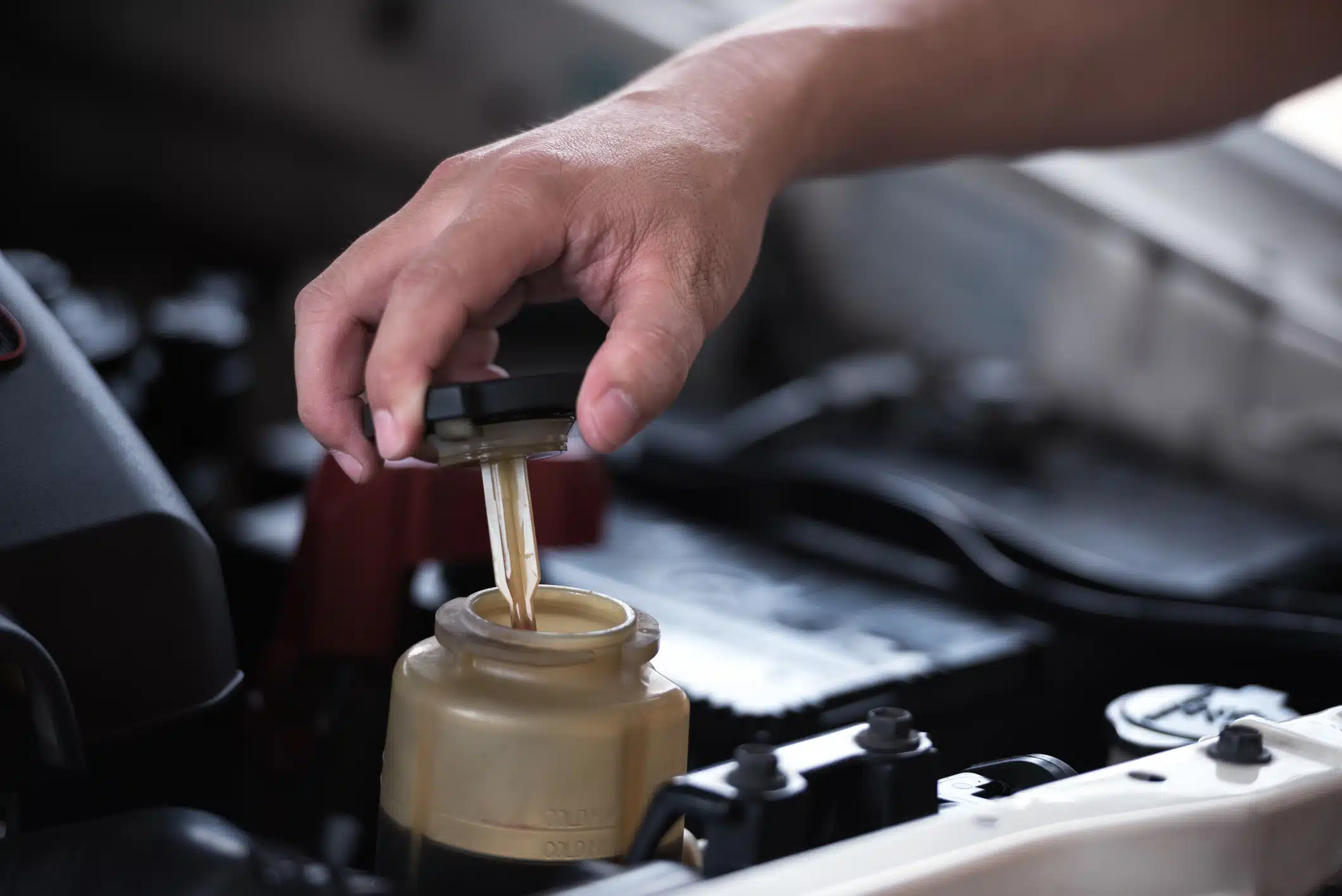
Power steering fluid plays an important role in the performance and longevity of a hydraulic power steering system. It’s what keeps things smooth and streamlined on the road, allowing for safe handling as well as ensuring your car is easy to manoeuvre at low speed.
Essentially, power steering fluid is the hydraulic fluid that transmits the power in your steering system. In a bit more detail, it helps create the pressure that pushes on either side of your car’s rack-mounted piston, allowing you to turn the wheels with ease.
Many vehicles use power-assisted steering (PAS) systems to make steering easier. In vehicles fitted with hydraulic power steering systems, power steering fluid is an essential component that helps provide steering assistance.
So, what happens without it, how do you keep it topped up and what happens if it leaks? We’ll cover all of this in this blog so you can feel confident in maintaining this part of your car.
Does every car use power steering fluid?
No. Many newer vehicles use electric power steering (EPS), which does not require hydraulic fluid. If you’re unable to find a power steering fluid reservoir under the bonnet, check your owner’s handbook to determine which type of steering system your vehicle uses.
Can you drive without power steering fluid?
It’s not advised to drive your car without power steering fluid. The force needed to turn the steering wheel will increase dramatically, particularly at low speeds. This will make steering significantly heavier, particularly at low speeds and during manoeuvres, making the vehicle more difficult and tiring to control.
What’s more, it could cause damage to your vehicle. Driving for extended periods of time without power steering fluid can damage the pump, rack and pinion. A lack of power steering fluid could also cause increased friction within the steering system, leading to long-term damage or premature wear.

Step-by-step: Adding power steering fluid to your car
Many drivers forget to check their car’s power steering fluid level as part of their regular maintenance regime. But it’s important to check the fluid level in the reservoir often to spot the early signs of a leak and make sure your steering system is in peak condition.
Below we’ll take you through the process of checking and topping up your car’s power steering fluid step by step:
Step 1: Locate the reservoir cylinder
This is where the fluid is located. The location of the power steering reservoir varies between vehicles, so consult your owner’s handbook if you’re unsure where to find it.
Step 2: Check the fluid’s level
If the cylinder is translucent, you should be able to see the level of fluid in there, but if it’s made of metal, then check the level with a dipstick, which is usually attached to the cylinder’s cap. If this is the case, have a look at how much of the dipstick is covered by power-steering fluid.
Step 3: Examine its colour
Healthy power steering fluid is usually clean and translucent, although the colour can vary by vehicle manufacturer. Dark or discoloured fluid may indicate contamination, oxidation or normal wear within the steering system and should be investigated further.
Step 4: Add power steering fluid to the correct fill level
Using the recommended fluid for your car, add the fluid steadily until you reach the correct level. Fill only to the level indicated by the manufacturer’s markings. Avoid overfilling, as excess fluid may be forced out of the reservoir as temperatures rise.

Signs of a power steering fluid leak
If you’ve noticed a change in how your car handles, a power steering fluid leak could be to blame. But since lots of problems can impact steering performance – including faults with the suspension, brakes and tyres – you need to know what the signs of a power steering fluid leak are so you can diagnose the issue properly.
Below we look at some of the typical symptoms of a power steering fluid leak:
- Whining, squealing or groaning noises when turning the steering wheel.
- Stiffness in the steering wheel that may come and go
- A ‘check power steering’ warning light on the dashboard
- Low power steering fluid level on the reservoir
- Fluid underneath the front of the vehicle, particularly around the steering rack or engine bay area
What causes power steering fluid to leak?
If your handling issue does turn out to be a power steering fluid leak, there are a number of possible causes. While we’d always recommend taking your car to a professional if you suspect a leaky power steering system, it’s good to know the potential problems which include:
- Worn seal on power steering pump
- Cracked, perished or loose power steering fluid hose
- Excessive pressure in power steering system caused by an overfilled reservoir, which could result in blown seals
- Wear and tear in power steering rack, particularly the shaft ends and seals
- Ageing seals can harden, crack or shrink over time, allowing fluid to escape from the system.
Power steering fluid leaks can be tricky to identify and diagnose, so our advice would always be to seek professional help as soon as you notice a problem with your car’s steering. Also never ignore a problem that concerns how your car handles, as power steering fluid leaks can cause dangerous variance in steering performance if left untreated.
If you’ve noticed a leak in your power steering system, in most cases a repair will be required to fix the problem at the source. Since most leaks are caused by gradual degradation and the corrosion of internal parts, replacing components like seals and pumps may be needed to seal the system and ensure it’s working optimally.
If you’re looking for an advanced power steering fluid, Prestone Power Steering Fluid is suitable for use in all vehicles and will prevent corrosion to extend the life of your power steering system. Simple to use at home with a pour-and-go formula, the fluid protects seals and gaskets while lubricating the entire steering mechanism – ensuring your power steering system is always operating at peak performance.