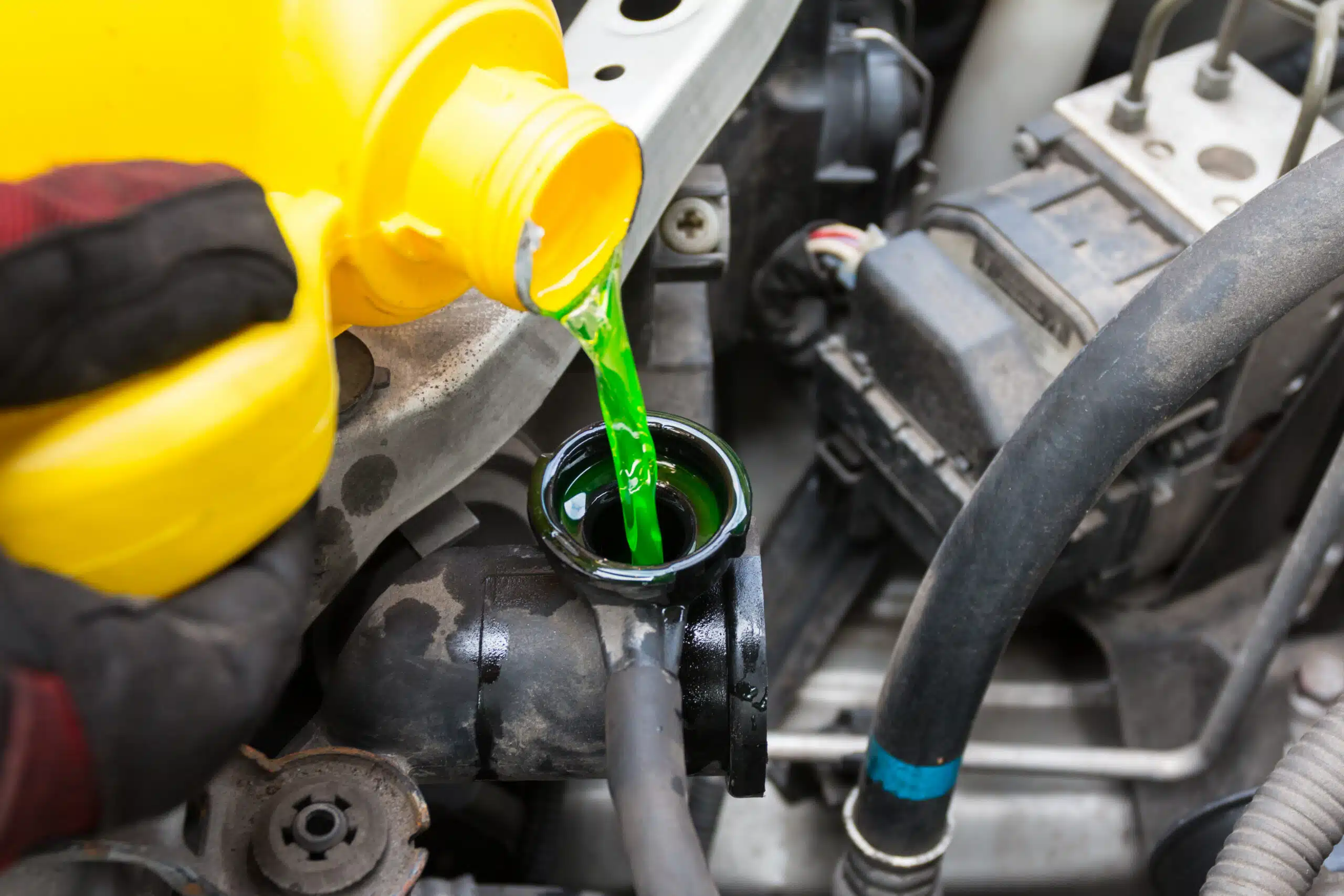
Coolant can be confusing, with many different options and types to choose from, not to mention that it’s also mixed with antifreeze too. Understanding the different coolants and how to use them is key to proper car maintenance, and this blog will help to make more sense of what’s available.
What are the different types of coolant?
There are three main types of coolant used in cars. Here we break down the different ones so you can better understand which one is right for your car.
- OAT (Organic Acid Technology): Organic acid technology coolant is a kind of antifreeze that enhances corrosion protection and prolongs the life of an engine’s cooling system by utilising organic acids and corrosion inhibitors. This type of coolant can last up to 5 years or 150,000 miles, whichever comes first, which is part of the reason it has replaced IAT on modern cars. All Prestone coolants are OAT coolants.
- IAT (Inorganic Additive Technology): Inorganic additive technology coolant is using ethylene glycol with added phosphates and silicates for corrosion prevention. This type of coolant tends to be used in older vehicles, is less effective than OAT coolants, and doesn’t last as long, with a recommended usage of 2 years or up to 30,000 miles.
- HOAT (Hybrid OAT): HOAT, or hybrid OAT coolant, uses a mix of OAT and IAT technologies to provide a better-performing product. Usually, they combine the organic acids used in OATs with the silicates of an IAT to deliver high-performing cooling qualities with added corrosion protection. There are also HOAT coolants available in phosphated varieties known as P-HOATs.
You will also find that you can buy ready to use coolant/antifreeze or coolant/antifreeze concentrate. The difference here is quite self-explanatory, but essentially the concentrate will need to be mixed with water before using, while the ready to use can be added directly to your coolant reservoir.

How to find the right coolant for your car
Most modern OAT coolants are compatible with most modern cars, but it can be handy to know which coolant is best suited to your vehicle.
The best way to check which coolant is right is to look at your owner’s manual. The manufacturer may have recommended a certain type of coolant for your car. Remember that if you drive a classic car, you should definitely double check the coolant type as it may be that they are more compatible with IAT coolants.
What do the different colours of coolant mean?
The colour of your coolant used to be determined by the type of chemicals used to prevent corrosion. This usually helped you to decide which was the right coolant to top up with. However, today the colour can vary between manufacturers and so you can’t rely on the colour alone to make sure you have the right one.
As our expert, Bruce Ellis, explains: “In days gone by, the colour of coolant was determined by the type of chemicals used to prevent corrosion — meaning you could tell a lot about the type of coolant used by its colour.
“Older coolants that used Inorganic Additive Technology (IAT) were usually blue or green in colour. With these types of coolants, you’d normally have to change them every two years, or every 30,000 miles.
“Next came Organic Acid Technology (OAT) coolants, whose chemical make-up offered better protection for cooling systems, and extended the life of the coolant. These ‘Extended Life Coolants’ (ELC), were usually orange in colour and offered a 5-year or 150,000-mile change interval. They could be a blend of IAT and OAT chemicals, and were therefore named ‘Hybrids’.
“These days, there’s no real reason for a coolant manufacturer to use a certain colour, so it’s not easy for you to know what chemicals are in the coolant just by seeing whether it’s blue, green, yellow or orange.”

What to know about mixing coolant
Many IAT and OAT coolants don’t mix. If they are both added, it can create a gelatinous substance that blocks the system and causes damage to internal components.
The fact that drivers can no longer distinguish different types of coolant by colour is a problem. For instance if you buy a used car, it’s incredibly difficult to tell what type of coolant is in the system unless you drain and flush the system, and whether or not it’s safe to top up the reservoir with a fluid of the same colour.
Given the very real danger of adding the wrong type of coolant to the reservoir, it isn’t worth taking the risk unless you’re absolutely sure. So what do you do if you need to top up your car’s cooling system?
Well, you could it take to a mechanic who will be able to work out which type of coolant is currently in the engine. But by far the simplest and easiest thing to do is to use Prestone High-Performance Coolant/Antifreeze. This is thanks to the patented formula that makes the coolant safe to mix with all others in all engines.
Dos and don’ts of mixing coolant
- Do always refer to your car’s owner’s manual before topping up the cooling system. It’s important to use the right type of coolant for your engine to ensure optimal protection and longevity.
- Do check your car’s coolant/antifreeze level as often as you check the oil. The fluid level should be at the ‘max’ marker at all times, so be prepared to top it up whenever necessary.
- Do flush your car’s cooling system in line with the change interval of your chosen coolant/antifreeze product. Rather than just topping up your car, it’s important to remove old coolant from the system to keep internal components in the best possible condition.
- Don’t base buying new coolant/antifreeze on the colour of your existing fluid. As we outlined above coolants are no longer classified by colour, so you have no way of knowing whether it’s the right product for your needs.
- Don’t ever mix OAT and IAT coolants if you’re not 100% sure that they’re compatible. The results can be horrendous, with the potential for significant damage and an eye-watering repair bill.
- Don’t be put off changing and topping up your car’s coolant/antifreeze through fear of mixing together incompatible coolants. If in any doubt, reach for Prestone for guaranteed compatibility and excellent long-term results for your car’s engine.

What coolant should I buy?
Always use the coolant/antifreeze recommended by your car’s manufacturer, as this will guarantee the best performance and protection for the engine.
You’ll find information on suggested coolant blends in your car’s manual or online through owner’s forums or your manufacturer’s official website. If you need to top up your car’s coolant/antifreeze but aren’t sure what type of coolant is currently in the system, use a premium universal coolant to ensure safe mixing and optimal performance.
Prestone Coolant/Antifreeze is guaranteed for all makes and models, and provides outstanding protection for up to 10 years. So if you’re concerned about putting the right coolant/antifreeze in your car, cut the stress and reach for Prestone.
At Prestone we’re experts in car maintenance fluids that excel in extremes, including coolant/antifreeze, screen wash and de-icer. For more information or to browse our full product range, visit the homepage today.